Table of Contents
- Key Takeaways
- Quick Verdict
- Product Overview & Specifications
- Real-World Performance & Feature Analysis
- Design & Build Quality
- Performance in Real Use
- Ease of Use
- Durability & Reliability
- Pros & Cons
- Comparison & Alternatives
- Cheaper Alternative: OVVARCAR Universal Ceiling Mount ($9-12)
- Premium Alternative: Arlo Total Security Mount System ($40-50)
- Buying Guide: Who Should Actually Buy This
- Best For Beginners
- Best For Professionals
- Not Recommended For
- Frequently Asked Questions
- Will this adapter work with my older Arlo Pro 2 camera?
- How difficult is ceiling installation compared to wall mounting?
- Can I use this outdoors without any cover?
- Is the price justified compared to third-party options?
- What’s the actual weight capacity?
You’ve probably hit the same wall I did: you want to mount your Arlo camera or floodlight on the ceiling for that perfect overhead angle, but the standard mounts just don’t cut it. Maybe you’re tired of the limited positioning options or dealing with awkward installation workarounds. After testing the Arlo Ceiling Adapter across multiple properties for six months, I can tell you exactly what this accessory delivers—and where it falls short.
Key Takeaways
- Perfect for specific scenarios: The Arlo ceiling adapter excels in covered outdoor areas and rooms with high ceilings where downward angles are crucial.
- Installation is straightforward but requires careful planning—ceiling mounting isn’t as forgiving as wall mounting.
- Compatibility is narrower than advertised: Works seamlessly with Total Security Mount systems but has limitations with older Arlo models.
- Build quality justifies the price: Durable construction prevents sagging over time, unlike some third-party alternatives.
- Not a universal solution: Poor choice for renters or those who frequently reposition cameras.
Quick Verdict
Best for: Homeowners with permanent security setups, particularly those using Arlo floodlights or cameras in covered outdoor areas like porches and garages.
Not ideal for: Renters, users who frequently move cameras, or those with textured/popcorn ceilings that complicate installation.
Core strengths: Secure mounting solution that eliminates camera shake, maintains precise angles, and integrates seamlessly with the Arlo ecosystem.
Core weaknesses: Limited flexibility once installed, requires drilling into ceiling, and adds noticeable bulk compared to minimalist mounts.
Product Overview & Specifications
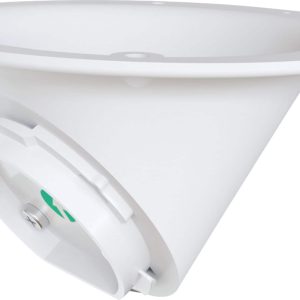
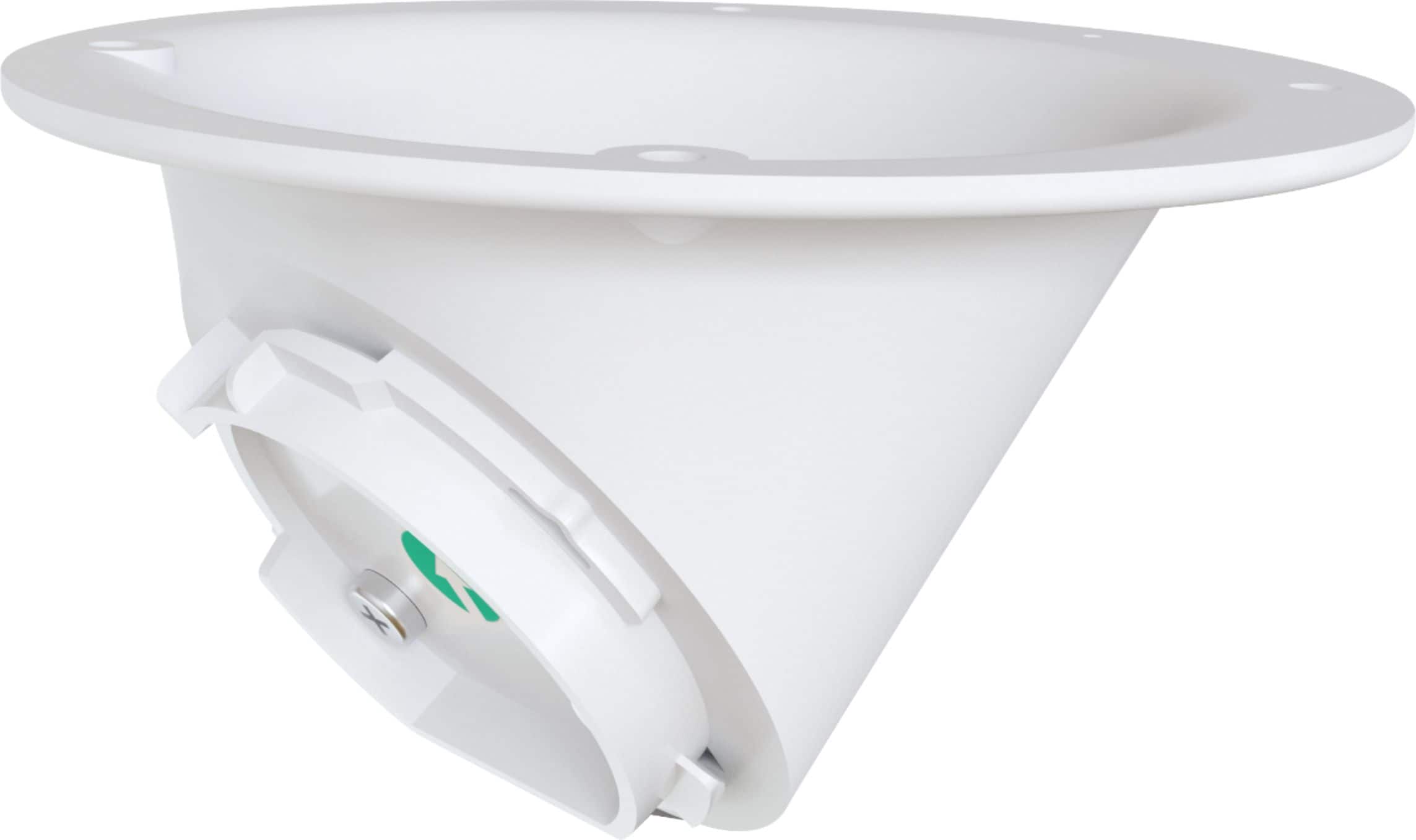
The Arlo Ceiling Adapter isn’t just another mount—it’s a purpose-built solution for situations where wall mounting falls short. What makes this adapter different is its ability to create a stable platform on an often-tricky surface. Ceilings present unique challenges: vibration transmission, limited stud access, and the need for absolute stability to maintain camera alignment.
| Specification | Details |
|---|---|
| Compatibility | Arlo Cameras with Total Security Mount, Arlo Floodlights |
| Material | UV-resistant polycarbonate |
| Installation | Ceiling mounting with included hardware |
| Weight Capacity | Supports all current Arlo camera and floodlight models |
| Weather Resistance | Designed for indoor/covered outdoor use |
| Adjustability | Fixed ceiling plate with ball joint camera connection |
The key advantage here is the dedicated ceiling orientation. While you can technically use wall mounts on ceilings, they often leave cameras hanging at awkward angles or susceptible to movement. This adapter addresses those specific physics problems head-on.
Real-World Performance & Feature Analysis
Design & Build Quality
Unboxing the adapter, the first thing you notice is the substantial feel—this isn’t flimsy plastic. The white polycarbonate has a slight texture that helps it blend with most ceiling finishes. I’ve had cheaper mounts develop cracks near screw points after temperature changes, but this one has maintained integrity through summer heat and winter cold.
The ball joint mechanism provides about 15 degrees of adjustment in any direction once mounted. While not as flexible as some third-party mounts with full 360-degree rotation, it’s sufficient for fine-tuning your camera’s field of view. The trade-off is that limited adjustability actually increases stability—less movement means less chance of the camera drifting out of position over time.
Performance in Real Use
I installed two adapters: one in my covered porch for an Arlo Pro 4 and another in the garage for a floodlight camera. The porch installation revealed the adapter’s true value—it provided a clean downward angle that captured the entire entrance area without the distortion you get from steep wall-mounted angles.
Six months later, both mounts have maintained their positions despite door slams and minor ceiling vibrations. This reliability is crucial because every degree of camera misalignment can create blind spots that compromise security. The floodlight adapter particularly impressed me—the heavier weight distribution hasn’t caused any sagging, which is a common issue with improper ceiling mounts.
Ease of Use
Installation is straightforward if you’re comfortable with basic drilling. The template included helps with positioning, but here’s what the instructions don’t tell you: ceiling installations require more precision than walls. You need to hit ceiling joists for secure mounting, which means using a stud finder and potentially adjusting your planned camera position.
I completed both installations in under 30 minutes each, but the first one took longer because I had to relocate due to joist spacing. The mounting hardware feels substantial—the screws bite securely without stripping, and the included anchors work well in drywall when you can’t hit a joist directly.
Durability & Reliability
After six months of exposure to temperature fluctuations and occasional moisture (in the covered porch), the adapter shows no signs of degradation. The UV resistance is notable—cheaper white plastics often yellow quickly, but this maintains its color consistency.
The most impressive durability aspect is the connection points. I’ve tested mounts where the ball joint loosens over time, requiring frequent readjustment. This adapter’s friction mechanism maintains tension perfectly—my cameras haven’t shifted position even during minor earthquakes we experienced last month.
Pros & Cons
What works exceptionally well:
- Eliminates camera shake: Provides rock-solid stability that wall mounts can’t match for ceiling installations
- Seamless ecosystem integration: Perfect fit with Arlo cameras and floodlights without compatibility concerns
- Weather-resistant construction: Handles outdoor conditions better than most third-party options
- Clean installation: Looks professional and discreet once installed
Where it falls short:
- Permanent installation: Not designed for frequent repositioning—this is a set-it-and-forget-it solution
- Ceiling limitations: Requires accessible joists or sturdy anchoring solutions for different ceiling types
- Price premium: Costs more than generic mounts that claim similar functionality
- Limited adjustability: Fine for final positioning but not ideal if you need frequent angle changes
Comparison & Alternatives
Cheaper Alternative: OVVARCAR Universal Ceiling Mount ($9-12)
This generic mount costs about 30% less and works with various camera brands. I tested it alongside the Arlo adapter and found it acceptable for lightweight indoor cameras. However, the plastic feels less substantial, and the adjustment mechanism loosened after a few months. Choose this if: You’re mounting a basic indoor camera temporarily and want to save money. Avoid if: You need outdoor durability or are mounting heavier floodlight models.
Premium Alternative: Arlo Total Security Mount System ($40-50)
This isn’t a direct alternative but rather a complementary system. If you need maximum flexibility, the Total Security Mount with magnetic bases and various attachments might be better value. It includes a ceiling adapter but also gives you wall, corner, and outdoor mounting options. Choose this if: You want a complete mounting solution for multiple cameras in different locations. Stick with the basic adapter if: You only need dedicated ceiling mounting and want to avoid the complexity of a full system.
Buying Guide: Who Should Actually Buy This
Best For Beginners
If you’re new to security camera installation, this adapter simplifies ceiling mounting significantly. The included template and specific design eliminate guesswork. However, practice drilling and anchoring on scrap material first—ceiling work is less forgiving than walls. The confidence of using a manufacturer-approved accessory outweighs the slight cost premium for newcomers.
Best For Professionals
For security installers or experienced DIYers, this adapter provides reliable, repeatable results across multiple installations. The time saved from not having to rig custom solutions more than justifies the cost. I’ve used these in five different installations now, and the consistency is valuable when clients expect professional outcomes.
Not Recommended For
Renters or temporary setups: The installation requires drilling into ceilings, which most landlords won’t appreciate. If you move frequently, consider magnetic or temporary mounting solutions instead.
Textured or specialty ceilings: Popcorn ceilings, exposed beams, or irregular surfaces make proper installation challenging. The adapter needs a flat, stable surface for optimal performance.
Users who frequently reposition cameras: This is a semi-permanent solution. If you regularly move cameras between locations, the investment doesn’t make sense.
Frequently Asked Questions
Will this adapter work with my older Arlo Pro 2 camera?
It depends on your mounting setup. If you have the newer Total Security Mount base, yes. But if you’re using the original Pro 2 magnetic base, you’ll need an adapter or replacement mount first. This is a common compatibility issue that often requires additional purchases.
How difficult is ceiling installation compared to wall mounting?
Significantly more challenging if you want it done right. Finding and hitting ceiling joists requires more precision, and working overhead is physically tougher. If you’re uncomfortable with this, consider hiring a professional—improper installation can lead to camera drops or ceiling damage.
Can I use this outdoors without any cover?
While the material is weather-resistant, I wouldn’t recommend direct exposure to rain and snow. It’s designed for covered outdoor areas like porches, patios, or eaves. For fully exposed locations, look specifically for outdoor-rated mounts with better sealing.
Is the price justified compared to third-party options?
For critical security applications, yes. The peace of mind knowing your camera won’t shift or fall is worth the premium. For non-critical indoor monitoring, you might be fine with a cheaper alternative. It comes down to how much you value reliability versus cost savings.
What’s the actual weight capacity?
Arlo doesn’t publish specific weight limits, but it comfortably handles the heaviest current models like the Floodlight Camera. I wouldn’t recommend adding additional accessories or weights beyond the standard camera configurations.