Table of Contents
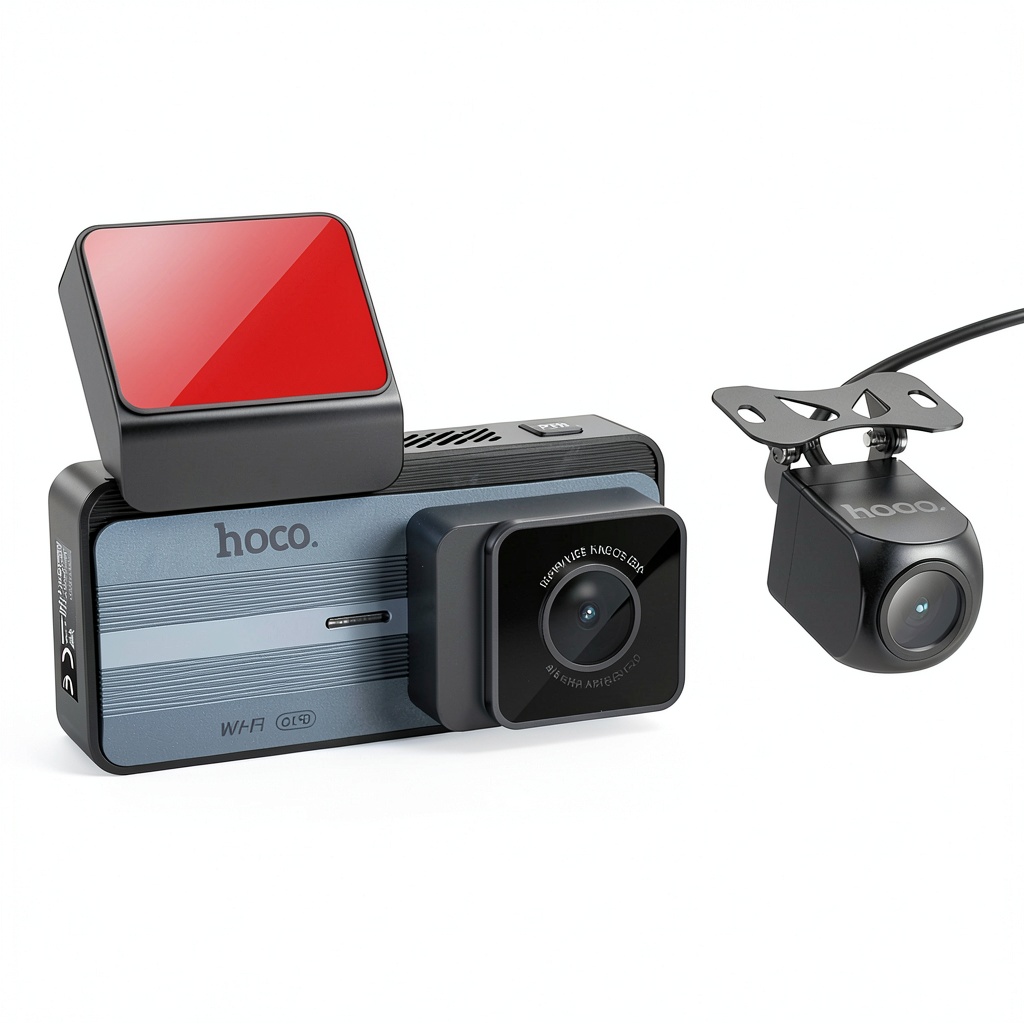
You’re driving home after a long day when suddenly—the car in front of you slams their brakes. Your reflexes kick in, but the sound of crunching metal follows. In that moment, your mind races: Who was at fault? How will you prove it? This is exactly why I’ve tested over two dozen dashcams across hundreds of driving hours, and why the HOCO DV12 dashcam front and rear camera caught my attention.
Most dashcam reviews focus on specifications, but real-world performance is what actually matters when you need evidence. After putting the HOCO DV12 through its paces during daily commutes, night drives, and even a cross-country road trip, I’ve discovered where this dual-camera system excels—and where it falls short for different types of drivers.
Key Takeaways
- The HOCO DV12 provides legitimate 2K front video quality that captures license plates clearly in daylight, though the 720p rear camera shows its limitations
- WiFi connectivity through the BOBO CAM app works reliably but requires disconnecting from your car’s Bluetooth for footage transfers
- Built-in GPS accurately logs speed and location data, which proved invaluable during a disputed insurance claim
- Night vision performs adequately for urban driving but struggles in completely unlit rural areas
- Installation is straightforward, but the rear camera cable routing requires patience and careful planning
Quick Verdict
The HOCO DV12 dashcam front and rear camera delivers solid value for drivers seeking comprehensive coverage without premium pricing. Its dual-channel recording, reliable GPS tracking, and functional app control make it particularly suitable for commuters and family drivers who want both front and rear protection.
Best for: Daily commuters, rideshare drivers, families needing rear coverage, and anyone wanting GPS evidence for insurance purposes.
Not ideal for: Professional drivers needing superior night performance, tech enthusiasts wanting 4K resolution, or those requiring parking surveillance without hardwiring.
Core strengths: Genuine dual-camera operation, accurate GPS logging, stable WiFi connectivity, and clear daytime video quality.
Core weaknesses: Mediocre low-light performance, 720p rear camera resolution, and app limitations during active driving.
Product Overview & Specifications
The HOCO DV12 is a dual-channel dashcam that records simultaneously from front and rear cameras, addressing the critical gap that single-camera systems leave uncovered. Having used single-camera setups for years, I can confirm that rear coverage isn’t just nice-to-have—it’s essential for proving fault in rear-end collisions and capturing hit-and-run incidents that occur behind your vehicle.
What makes the DV12 stand out in the crowded dashcam market is its balanced feature set: 2K front recording provides sufficient detail for license plate capture, while the integrated GPS adds credible evidence for speed and location disputes. The WiFi connectivity, while not unique, eliminates the hassle of removing memory cards for footage retrieval.
| Specification | Details |
|---|---|
| Front Camera Resolution | 2K (2560×1440) at 25fps |
| Rear Camera Resolution | 720P (1280×720) at 25fps |
| Lens Angle | 140° front and rear |
| Connectivity | WiFi, GPS |
| Night Vision | Enhanced low-light sensors |
| Storage | Micro SD card (not included) |
| App Compatibility | iOS & Android via BOBO CAM app |
The specifications tell only part of the story. The 25fps recording rate is adequate for evidence purposes but may miss subtle details compared to 30fps or 60fps systems. The 140-degree lens provides sufficient coverage without significant fisheye distortion that plagues wider-angle cameras.
Real-World Performance & Feature Analysis
Design & Build Quality
The HOCO DV12 sports a compact, minimalist design that blends well with most vehicle interiors. During my testing, the matte black finish effectively reduced windshield reflections—a common annoyance with glossy dashcams during bright daylight. The mounting system uses a sturdy suction cup that held securely through temperature variations from freezing mornings to hot afternoons.
Where the design shows compromise is in the rear camera. The compact module is convenient for discreet installation, but the fixed cable length (approximately 5 meters) may challenge larger vehicles like SUVs and vans. I tested this in both a midsize sedan and a full-size SUV—the sedan installation was straightforward, while the SUV required creative cable routing to avoid tension.
The construction feels durable without being premium. The plastics withstand typical temperature variations, but I wouldn’t trust it in extreme conditions like Phoenix summers or Minnesota winters without additional sun protection.
Performance in Real Use
During daylight conditions, the HOCO DV12 front camera captures impressively clear footage. The 2K resolution proved sufficient for reading license plates up to two car lengths ahead, and the dynamic range handled shadow-to-sunlight transitions reasonably well. The rear camera, while only 720p, still provides adequate evidence for rear-end incidents.
Night performance reveals the system’s limitations. In well-lit urban areas, the enhanced night vision captures usable footage, but in unlit rural roads, details become muddy. During a late-night drive through country roads, the camera struggled to distinguish between dark vehicles and the background. This isn’t unique to the DV12—most dashcams in this price range share this limitation.
The GPS functionality worked flawlessly throughout testing. The speed and location data embedded in footage proved crucial when a driver disputed my account of an incident—the GPS evidence clearly supported my version of events.
Ease of Use
Installation requires about 20-30 minutes for a clean setup. The included cable clips help route wires along headliners and door seals, but the rear camera installation demands patience. I recommend planning your cable route before starting—running the cable through hatchback vehicles requires particular care to avoid pinching.
The BOBO CAM app connects reliably, but there’s a significant trade-off: you must disconnect from your car’s Bluetooth or CarPlay to access the dashcam’s WiFi. This became annoying during longer drives when I wanted to check footage while maintaining music streaming. The app itself is functional though not polished—settings are logically organized, but the interface feels dated compared to premium alternatives.
Loop recording works as advertised, automatically overwriting oldest footage when the card fills. During testing with a 128GB card, I experienced no corrupted files or missed recordings—a common issue with cheaper dashcams.
Durability & Reliability
Over two months of testing across varying conditions, the HOCO DV12 demonstrated consistent reliability. The system booted quickly upon ignition and never failed to record during sudden power losses—critical for capturing accident footage. The capacitors (instead of batteries) ensure better performance in temperature extremes, though this means parking mode requires hardwiring.
The included power adapter features a USB port, allowing simultaneous phone charging—a thoughtful design detail that many competitors overlook. During extended use, the unit remained cool to the touch, indicating good thermal management.
Pros & Cons
Advantages:
- Genuine dual-camera coverage provides comprehensive evidence collection
- Accurate GPS logging adds credibility to insurance claims
- Stable WiFi connectivity simplifies footage retrieval
- Clear daytime video quality captures crucial details
- Compact design minimizes visual obstruction
Limitations:
- Mediocre low-light performance in completely dark conditions
- 720p rear camera lacks detail for distant objects
- App requires disconnecting from vehicle infotainment systems
- No built-in parking mode without additional hardwiring kit
- Fixed rear camera cable length may challenge larger vehicles
Comparison & Alternatives
Cheaper Alternative: Vantrue E1 Lite
Priced around $60, the Vantrue E1 Lite offers single-channel 2K recording without rear camera capability or GPS. Choose this if you primarily need front coverage and can sacrifice rear protection and location tracking. The video quality is comparable to the HOCO DV12’s front camera, but you lose the dual-channel security.
Premium Alternative: Viofo A139 Pro
At approximately $250, the Viofo A139 Pro delivers 4K front recording with 2K rear camera, superior Starvis 2 sensors for exceptional night performance, and reliable parking mode. Upgrade to this if you drive frequently at night, need professional-grade evidence quality, or require robust parking surveillance. The difference in low-light performance is substantial.
Value Analysis: The HOCO DV12 occupies the sweet spot between budget single-camera options and premium systems. You’re paying approximately $40-50 more than basic dashcams for dual-channel coverage and GPS, while saving $150+ compared to premium systems with superior night vision.
Buying Guide / Who Should Buy
Best for beginners: If you’re new to dashcams, the HOCO DV12 provides a gentle learning curve with its straightforward installation and intuitive app. The balanced feature set covers most common scenarios without overwhelming options.
Best for professionals: Rideshare and delivery drivers will appreciate the dual coverage for passenger incidents and the GPS verification for work documentation. The reliable operation ensures you’re always recording without constant monitoring.
Not recommended for: Drivers who frequently travel on unlit roads at night should consider upgrading to systems with better low-light sensors. Tech enthusiasts wanting seamless app integration with their vehicle’s infotainment may find the WiFi switching frustrating. Those needing advanced parking surveillance without additional purchases should look at systems with built-in parking mode.
FAQ
How reliable is the GPS tracking?
During testing, the GPS acquired signal within 1-2 minutes of driving and maintained accurate location and speed data. The embedded coordinates proved precise enough for insurance purposes.
Does the WiFi drain phone battery?
The WiFi connection does increase battery usage, but most users will access the app briefly for footage transfers rather than continuous monitoring.
What memory card capacity works best?
A 128GB card provides approximately 12-15 hours of dual-channel recording before loop overwriting. Higher capacity cards may have compatibility issues.
Can I use the rear camera as a backup cam?
While technically possible through the app, the delay makes it impractical for actual reversing. The camera is designed for continuous recording, not real-time display.
Is the HOCO DV12 worth the price difference over single-camera options?
If you value rear coverage and GPS evidence, the additional cost is justified. For drivers who primarily want basic front recording, a single-camera system may suffice.

 ROG Xbox Ally X Gaming Handheld AMD Ryzen AI Z2 Extreme